Belgrade Initiative Preview

CGS in Belgrade, Serbia -

Representing the Center for Global Strategies, our Executive Director, Henry Deneen, and Board Member, Steve Jones, traveled from the United States over the last few days to meet with new friends and contacts across several industries and areas of influence in Serbia.

Some positive meetings were held with key influencers, and doors were opened during this exploratory trip, including meeting with contacts working with the UNHCR, addiction recovery, and wider business communities.

As these relationships unfold and strategies for catalyzing international friendships are fleshed out, more information will be shared here, so stay tuned to the CGS website or please feel free to drop us a note to request additional information here.

Upcoming Initiatives: Serbia and England

In August, the CGS Board decided together at during its 2021 Board meeting on upcoming initiatives for the remainder of the calendar year.

The first trips will include an exploratory trip to Serbia on Oct. 15-19 to investigate potential partnerships, as well as a trip to England in November, working with both refugees and the professionals caring for them on the tropic of trauma care.

Stay tuned to this space for updates and information on how to get involved.

Profile of a CGS Partner in the Balkan Area

Responding to needs with new ways enabled by technology

Koreni, a CGS partner in North Macedonia whose name means “Roots”, is an education development organization striving to be a catalyst of positive change within the local education system.

Going to the roots of education and seeking to empower teachers and students alike in the nation of North Macedonia, Koreni provides professional development opportunities, resources, and projects working alongside teachers in the official education system, including:

  • Online Storytime (featured) –building a digital “library” full of children’s stories that are read aloud online, with the goal of modeling good reading techniques for teachers / parents and to help increase the love for books and reading in children.

  • Professional development seminars and programs for teachers – on such topics as Dealing with Challenging Behaviors in the Classroom, Dyslexia, Math Methods, Increasing Reading Comprehension, English Teachers Workshops, etc.

  • English camps – designed for children in the public schools.  These camps are run by Koreni with the help of the local teachers as interactive thematic multi-day events that teach English through games, crafts, stories, snacks, etc.

  • Library – Koreni helps provide physical resources to teachers and students in the learning center that we partner with.

Focusing on one exciting project, Koreni came up with the idea of reading children’s’ books online shortly after the COVID-19 “stay-at-home” order went into effect. Realizing that people could no longer come in and check out books from the Koreni library, the director decided to utilize available technology to continue getting books out to the people in both English and Macedonian. The intent is to model read aloud techniques to parents and teachers, and asking engaging comprehension questions throughout the book, while increasing people’s love for reading and books.

From the Koreni Director:

Interestingly, this project as highlighted a need to us… the need for more interesting and engaging children’s literature in Macedonian. We have been struggling to find books to have our Macedonian readers read. The main children’s books available in Macedonian are fairytales (the same 10-15 in various versions). One of our dreams as Koreni is to someday host, in partnership with local publishers, a workshop for children’s authors here in North Macedonia, encouraging them and equipping them with the tools they need to produce more books.

What an incredible way to support local education in areas which value investment.

You can learn more about Koreni and see their online storytime in action by clicking here.

Amazon Outreach: Transforming Lives on Two Continents

Stretching over 4,345 miles, the Amazon River Basin is an expansive, yet isolated region. Running through the South American countries of Peru, Colombia, Ecuador, Bolivia, Venezuela and Brazil, the Amazon River is the longest waterway in the world and accounts for 20% of the fresh water that drains into the planet’s oceans.

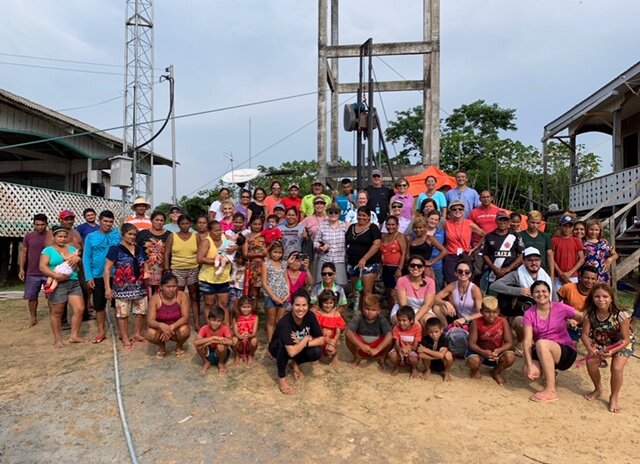
Indigenous people, who have been neglected by civilization, inhabit the Amazon. They call themselves “the forgotten people.” The river is their only highway, and boat travel, their only transportation. Even the developed nation of Brazil has somewhat forgotten these people, as they lack access to modern medicine, basic needs and the conveniences found in the larger developed cities in the southern part of Brazil. There are an estimated 30,000 villages on the banks of the Amazon River with no Gospel presence.

Amazon Outreach is a Dallas-based organization that began in 1999, formed to provide a partnership of North Americans bringing much needed hope and medical and physical support along the river, via safe and dependable vessels. The State of Amazonas in northern Brazil, more than 1,000 tributaries come together to form the Amazon River. And it is on these headwaters where Amazon Outreach trips take place – not only on the Amazon, but also the Solimões, Negro, Cuieiras and Madeira rivers.

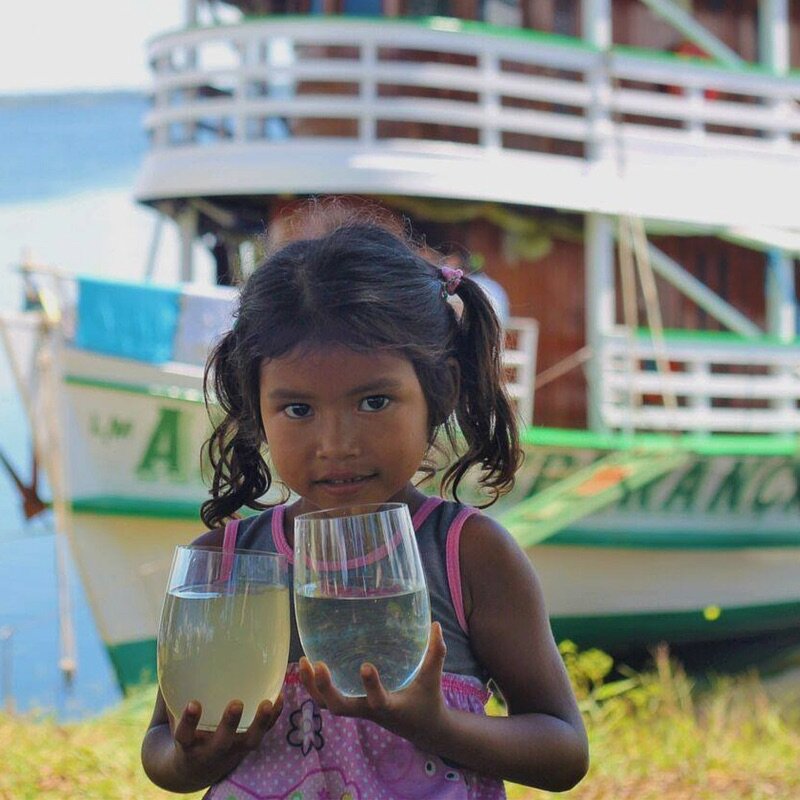
This transformative work has impacted villages where individuals have been sick their whole lives, and many are suffering unnecessarily – and unaware of the dangers brought about by drinking impure water straight from the river, where they wash their clothes, hydrate their cattle and bath in the same locale in which motorized vessels add toxins to the only water source.

Amazon Outreach provides clean water through drilling water wells, resulting in newfound health for the first time to an entire village. Volunteer dentists pull teeth and teach oral hygiene, and teams of medical doctors prescribe and dispense medications when available. Reading glasses are provided for individuals who have none, in addition to sunglasses, which are given away to fishermen who suffer from cataracts, due to prolonged exposure to reflected glare from the sun off the water.

Before we depart from a village, family packs with gently used clothing, tools, fishing supplies and simple household items are given to every represented family. Our visits are often the beginning of a new normal, where little to no modern help for some their most basic needs has ever been available.

With the COVID-19 pandemic, the most urgent need along the Amazon River is food. A government mandated travel ban on the river has stopped local farmers from being able to sell their manioc produce beyond their own surrounding village. Fishermen are also not allowed to navigate to markets downstream to sell their catches and all incoming food supply deliveries have stopped. This restricted passage on the river has isolated individual villages and the desperate need for food is of upmost importance for the survival of these people.

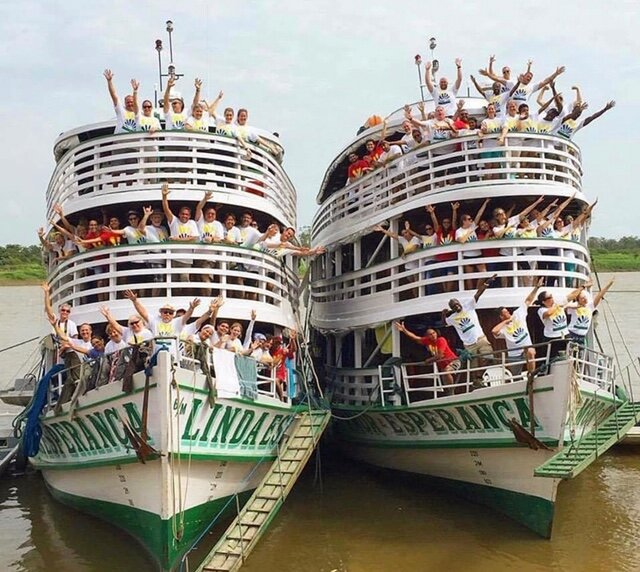
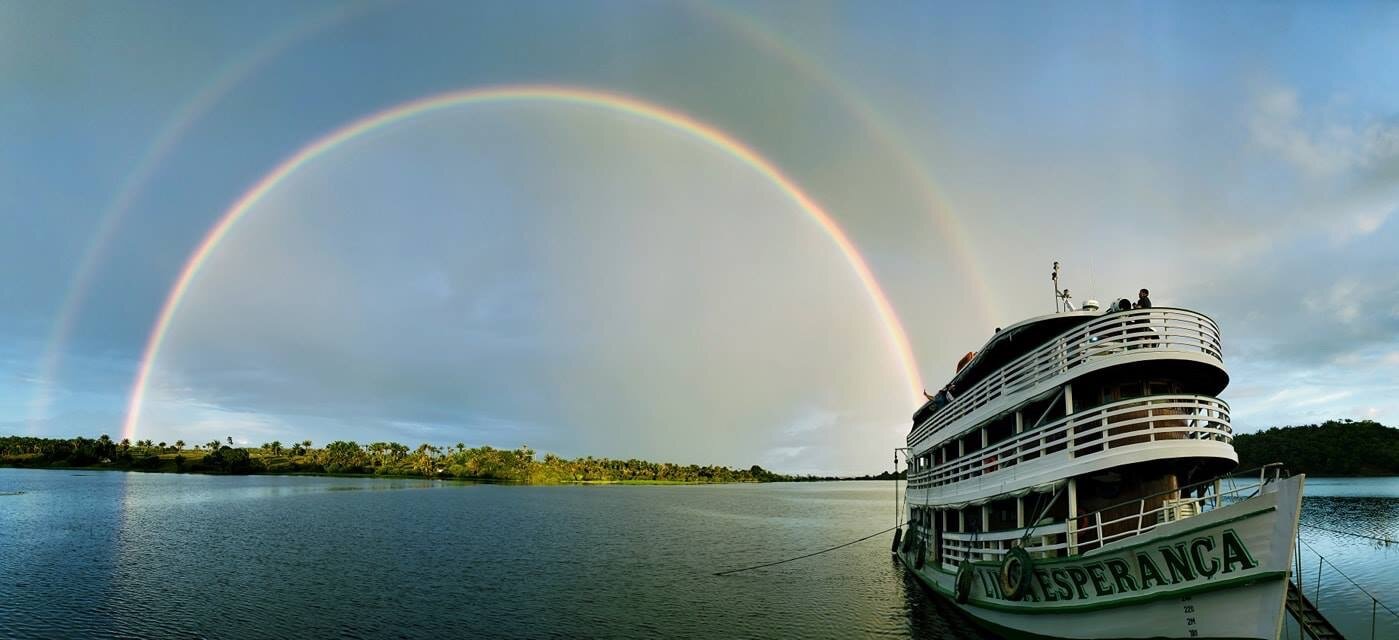
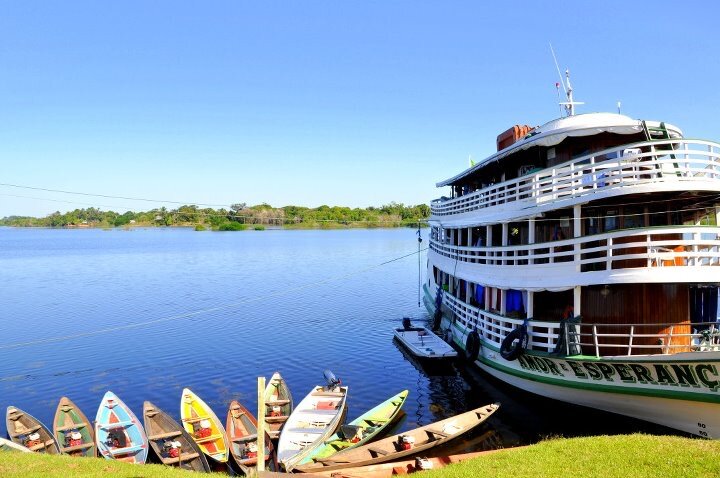
It's crucial to understand poverty through the eyes of the poor. The developed world defines poverty as a lack of resources; the poor self-define it as a lack of hope. Over the years, our two mission boats, "Linda Esperança" (Beautiful Hope) and "Amor e Esperança" (Love and Hope), have indeed brought love and hope in spades, along with immediate resources and ongoing relationships.

Our ongoing love for these people compels us to find new ways to provide for their needs during the mandated coronavirus quarantined/lockdown. It is our desire to somehow find a way to provide food in the weeks and months to come, until the day when we can once again resume our full mission efforts along the vast Amazon River waterways.

- From a CGS Partner

Global Opportunity: Potential Impact of COVID-19 on Global Food Supply

Here at CGS, we are closely watching the global situation unfold as the world continues to respond to COVID-19. Many heroes have arisen out of this global pandemic, and to those who are responding actively, we say thank you!

As we look for new ways to become engaged in the future, we are learning that which is apparent now may only be a piece of the puzzle. New challenges will arise that we all must overcome together over the coming months, weeks, and years.

Right now, we are on the brink of a potential food shortage that could become the next major challenge coming from COVID-19. World Food Programme Executive Director, David Beasley, recently addressed the UN Security Council on this very issue:

At the same time while dealing with a COVID-19 pandemic, we are also on the brink of a hunger pandemic.

In my conversations with world leaders over the past many months, before the Coronavirus even became an issue, I was saying that 2020 would be facing the worst humanitarian crisis since World War II for a number of reasons.  

Such as the wars in Syria and Yemen. The deepening crises in places like South Sudan and, as Jan Egeland will no doubt set out, Burkina Faso and the Central Sahel region. The desert locust swarms in Africa, as Director General Qu highlighted in his remarks. And more frequent natural disasters and changing weather patterns. The economic crisis in Lebanon affecting millions of Syrian refugees. DRC, Sudan, Ethiopia. And the list goes on. We’re already facing a perfect storm.  

So today, with COVID-19, I want to stress that we are not only facing a global health pandemic but also a global humanitarian catastrophe. Millions of civilians living in conflict-scarred nations, including many women and children, face being pushed to the brink of starvation, with the spectre of famine a very real and dangerous possibility. 

This sounds truly shocking but let me give you the numbers: 821 million people go to bed hungry every night all over the world, chronically hungry, and as the new Global Report on Food Crisis published today shows, there are a further 135 million people facing crisis levels of hunger or worse. That means 135 million people on earth are marching towards the brink of starvation. But now the World Food Programme analysis shows that, due to the Coronavirus, an additional 130 million people could be pushed to the brink of starvation by the end of 2020.  That’s a total of 265 million people.  

On any given day now, WFP offers a lifeline to nearly 100 million people, up from about 80 million just a few years ago. This includes about 30 million people who literally depend on us to stay alive. If we can’t reach these people with the life-saving assistance they need, our analysis shows that 300,000 people could starve to death every single day over a three-month period.  This does not include the increase of starvation due to COVID-19. 

In a worst-case scenario, we could be looking at famine in about three dozen countries, and in fact, in 10 of these countries we already have more than one million people per country who are on the verge of starvation. In many places, this human suffering is the heavy price of conflict.  

At WFP, we are proud that this Council made the historic decision to pass Resolution 2417 in May 2018. It was amazing to see the council come together. Now we have to live up to our pledge to protect the most vulnerable and act immediately to save lives. 

As the WFP responds, we will be closely monitoring the situation and seeking opportunities to engage with this major challenge; we invite you to stay engaged with us. We are genuinely in this together.

For the full transcript of this statement to the UN Security Council, please visit the WFP website: https://www.wfp.org/news/wfp-chief-warns-hunger-pandemic-covid-19-spreads-statement-un-security-council

Report from CGS Vision Summit

CGS Board members and their spouses, alongside workers, investors, and friends met in Atlanta, GA from Feb. 21-23 for a Vision Summit. Attendees voiced that it was good to be together, and considering recent worldwide events, it was well-timed. Our purpose was to hear about what is being accomplished in furthering our Vision and Mission and to plan for what is coming in the next 3-5 years. We were encouraged by reports of:

  • Work in Morocco and Egypt - training in business principles and developing start-up businesses

  • Educational initiatives in North Macedonia

  • Refugee work in Greece, Germany, and throughout Europe

  • Collaboration with world leaders in Nepal, the Philippines and Washington, D.C.

  • Work in the Amazon River regions of South America

  • Trauma counseling initiatives among refugees and people working with refugees.

We enjoyed a live interview with former South Carolina Governor David M. Beasley, who now serves as the Executive Director of the World Food Programme in Rome, Italy, and who is a co-founder of CGS. He talked about the incredible needs around the world and encouraged continued collaboration with friends, government leaders, and business-people in North Africa, Yemen, and other nations in which CGS has worked and is working. Incidentally, Executive Director Beasley recently contracted and has fully recovered from COVID-19.

CGS continues to discover and pursue ways to engage across the globe, especially in these days of the worldwide pandemic. We believe there will be many opportunities for strategic engagement as the world emerges from this global threat.

Please contact us if you would like to know more.

Best regards,

Dr. Henry L. Deneen
Executive Director

Center for Global Strategies, Ltd.

COVID-19 Update

Dear Friends:

Since our founding as a global collective, CGS has engaged in international affairs through countless initiatives. Supporting connectivity, developing cross-cultural relationships, and encouraging mutual understanding are only a few examples of the work to which CGS is committed. Thankfully, our staff and partners pursuing this work are all safe during this challenging time. We are actively engaged in supporting our families and immediate communities as we weather the storm together.

As we adapt with the rest of the world in response to COVID-19, we are also renewing our commitment to the CGS Mission and Vision. You can learn more about our official Mission and Vision statements here.

We recognize the worldwide suffering and panic that COVID-19 is causing. One way we believe that CGS can help is by continuing to build and maintain key international relationships; the need for innovative approaches to cross-cultural work will only increase in response to this pandemic.

Through the remote training and connection systems currently in place, as well as CGS’ efforts with crisis counseling, we are ready to meet the needs of the changing world. CGS is well positioned to continue connecting with partners cross-culturally and empowering economic integration. As always, we believe these initiatives can be achieved through genuine friendships and the exchange of ideas.

We want to thank you, our partners and stakeholders, for your continued support of and belief in CGS. We believe that now more than ever, mutual understanding and learning from one another have the power to change the world for the better.

Best regards,

Dr. Henry L. Deneen

Executive Director

Center for Global Strategies, Ltd.

International English Film Camp

The week of April 1-7 CGS Koreni organized and ran International English Film Camp.  It was the 6th annual camp of this kind run in conjunction with Southeast European University (SEEU). This year three filmmakers joined us – two Americans and one Egyptian.  These three experts skillfully helped the participants work in teams to develop short stories and make short films.  This year there were over 20 participants, including Albanians, Macedonians, Americans, Japanese, a Czech, and a South Korean.  Working in four teams, the groups each wrote a script, acted in, and shot a short film (4-7 minutes in length).  Saturday evening was the red carpet premiere event.  It was an evening to celebrate our creations on the big screen.  Judges presented awards for Best Acting, Writing, Filming and Editing, and the audience voted to determine which group would receive the People’s Choice Award. 

The goals of the camp are multi-layered.  The obvious goals are for the participants to learn filmmaking skills and improve their English while doing so.  More important to CGS Koreni, though, are the less obvious goals.  During this camp, we hope that stereotypes are torn down, and instead friendships are built across nationalities.  As the people work in groups, they learn about each other, laugh together, and work together to create something bigger and better than they could have on their own.  The design of the camp supports and encourages cross-cultural skills and connections, communication, collaboration, critical thinking, and creativity.  These are all skills necessary to thrive in the 21st century.  It was a successful week, and as filmmakers would say, “That’s a wrap!”

To view the films, visit Koreni’s YouTube page called “Koreni Education Development”.

Rachelle Neal

Europe—Seeing Beyond the Sights

Europe is a beautiful continent, rich in history and full of iconic landmarks. It’s also full of people--741 million according to recent estimates. 741 million people with diverse backgrounds and life experiences.  And with diverse needs.

Spend some time sitting next to the Eiffel Tower and you’ll see a breathtaking feat of architecture. You’ll also see young men from central Africa and South East Asia selling trinkets and souvenirs. How did they get there? What did they flee from? What were they hoping for in coming to France?

Or spend an afternoon walking through the Botanical Gardens in Brussels and you’ll see French Baroque buildings and an Italian garden. Walk a few blocks over and you’ll see women of various nationalities selling themselves. How many of them are there against their will? What were they promised to lure them here? Work in a restaurant or as a model? An education?

This is some of what I saw on a recent trip away from my normal stomping grounds. Diverse people, diverse needs. But also, diverse response. One of the things that’s amazed me in working with refugees in Germany is the mixture of people I’ve worked alongside—locals and foreigners, with the government or an NGO, students and retirees. The same was true in these other cities I visited. Groups of people had seen a need and were working together to do something about it. Everything from raising awareness of human trafficking to providing after school activities for refugee children.

It’s amazing and an honor to be a part of.

Lynnae Kruis

Inter-cultural Research Expert

Building Up Teachers - Impacting Lives

North Macedonia

Center for Global Strategies is focused on education development in Macedonia.  Our local name is “Koreni”, meaning “Roots”.  We seek to strengthen education here by empowering teachers and schools directly, since they are the roots of the education system.  The week of March 11th CGS “Koreni” welcomed a small team from Texas made up of three ladies with doctorates in education and a teenager.  Each came to Skopje, North Macedonia ready to serve and pour into the local educational institutions in whatever way they could.  As such we were able to work with local Macedonian schools, as well as an international school and our partner Bridges Learning Center. 

 The three educators held professional development sessions for school directors, university teachers, English teachers, librarians, and general classroom teachers.  Many of those sessions focused on how reading can improve learning and help teachers differentiate for their students.  The seminars for the school directors helped them understand how they could do more than just manage their schools; they can lead, casting vision for and guiding the teachers into more effective instruction. These professionals also took time to do some 1-on-1 mentoring with teachers, connected with a couple universities and held a seminar helping parents know how to better support their children’s learning. 

 At the same time, the teenager was out engaging in and giving to the community in her own way.  She visited English classes in two local elementary schools, helped in the 5 and 6 year old classes at an international school, interacted with local teens, and even worked with one of the beneficiaries at a home for adults with special needs. 

 What a blessing and encouragement it was to host this group of ladies!  We look forward to hosting them, and others like them, again in the future.  Together we can positively impact the education here in North Macedonia. 

Rachelle Neal